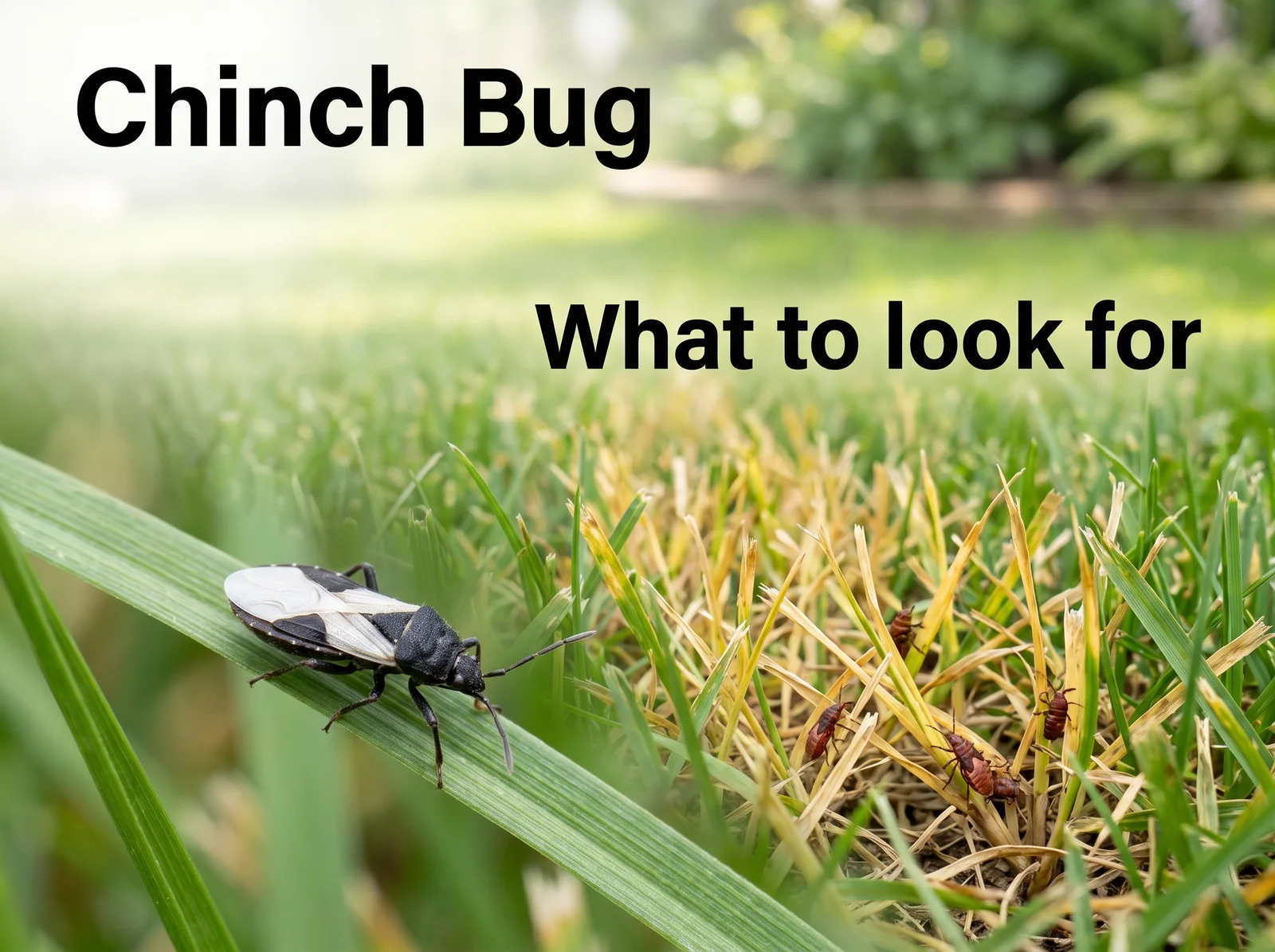
What should you do on day one if you suspect chinch bugs?
Start by looking closely at the damaged area before doing anything else. Chinch bug damage often gets blamed on drought or disease, so a quick visual check saves you from treating the wrong problem.
Kneel at the edge of a brown patch and part the grass down to the thatch. Look for small, fast-moving insects near the soil line. If you see them, you have a strong lead on how to get rid of chinch bug damage before it spreads further.
Water the area lightly and check again in an hour. Chinch bugs often move toward the surface after watering, which makes them easier to spot on your first day of inspection.
Mark the edge of the damaged patch with a stick or flag. This gives you a baseline to compare against in a week, so you know if the problem is growing or holding steady.
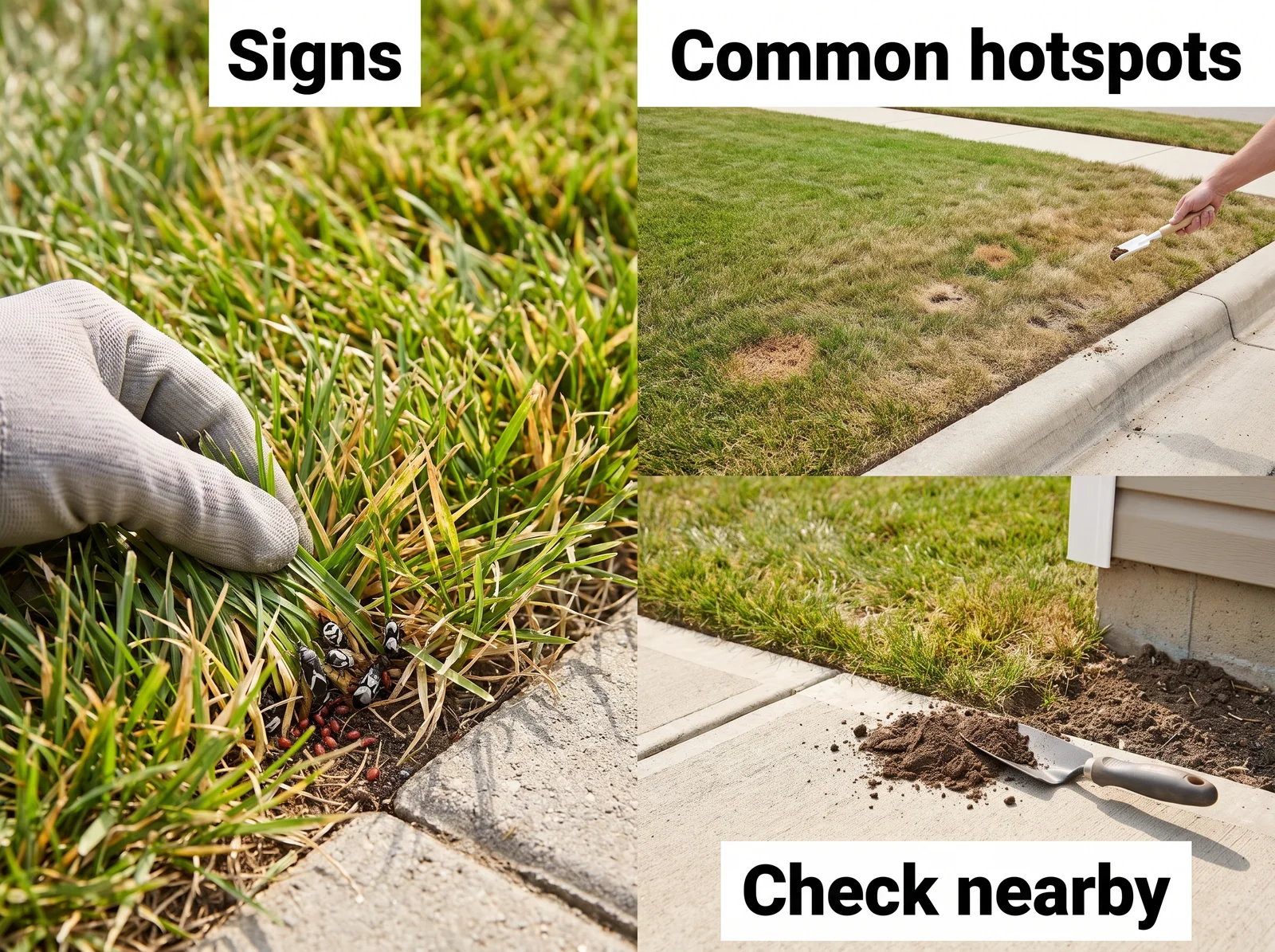
How do you confirm it's really chinch bugs and not something else?
Several lawn problems look similar from a distance. Drought stress, grub damage, and fungal disease can all leave patchy brown areas, so confirming the actual pest matters before you spend time or money.
A simple can test helps a lot. Cut both ends off a coffee can, push it a few inches into the soil at the edge of a damaged patch, and fill it with water. Chinch bugs float to the surface within about ten minutes if they're present.
Photos help too. If you're not sure what you're looking at, a clear close-up photo lets a plant clinic, extension office, or online identification tool confirm the insect before you move forward with any treatment plan.
If you want a second opinion on the photo, BugKnow, Insectio, and BugIdentifier.Org all offer ways to check insect photos online, which is covered in more detail below.
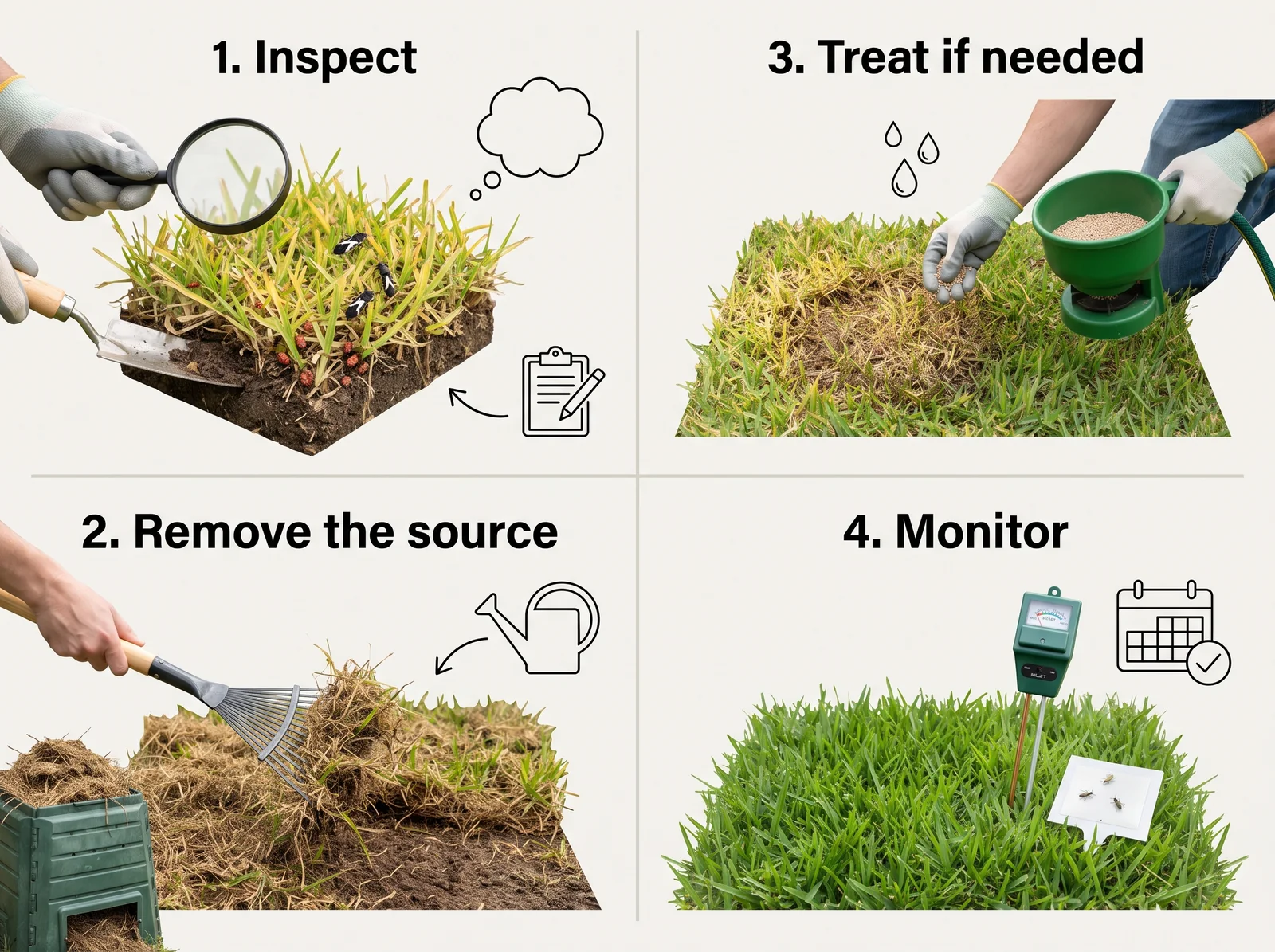
Where should you inspect to find the source of the problem?
Chinch bugs favor certain conditions, so the source is rarely random. Sunny, dry, stressed areas of lawn near sidewalks, driveways, or south-facing slopes are common starting points.
Check the thatch layer across your yard, not just the visibly damaged patch. Thick thatch holds heat and moisture in a way that chinch bugs seem to prefer, and it can hide early infestations before brown patches appear.
Look at your watering pattern too. Dry, compacted soil under heat stress is where chinch bug damage tends to show up first and spread fastest, since stressed grass has less ability to recover from feeding damage.
Walk the full perimeter of any brown patch and note whether it's expanding in one direction. That pattern often points toward a nearby dry or thin area that's feeding the spread.
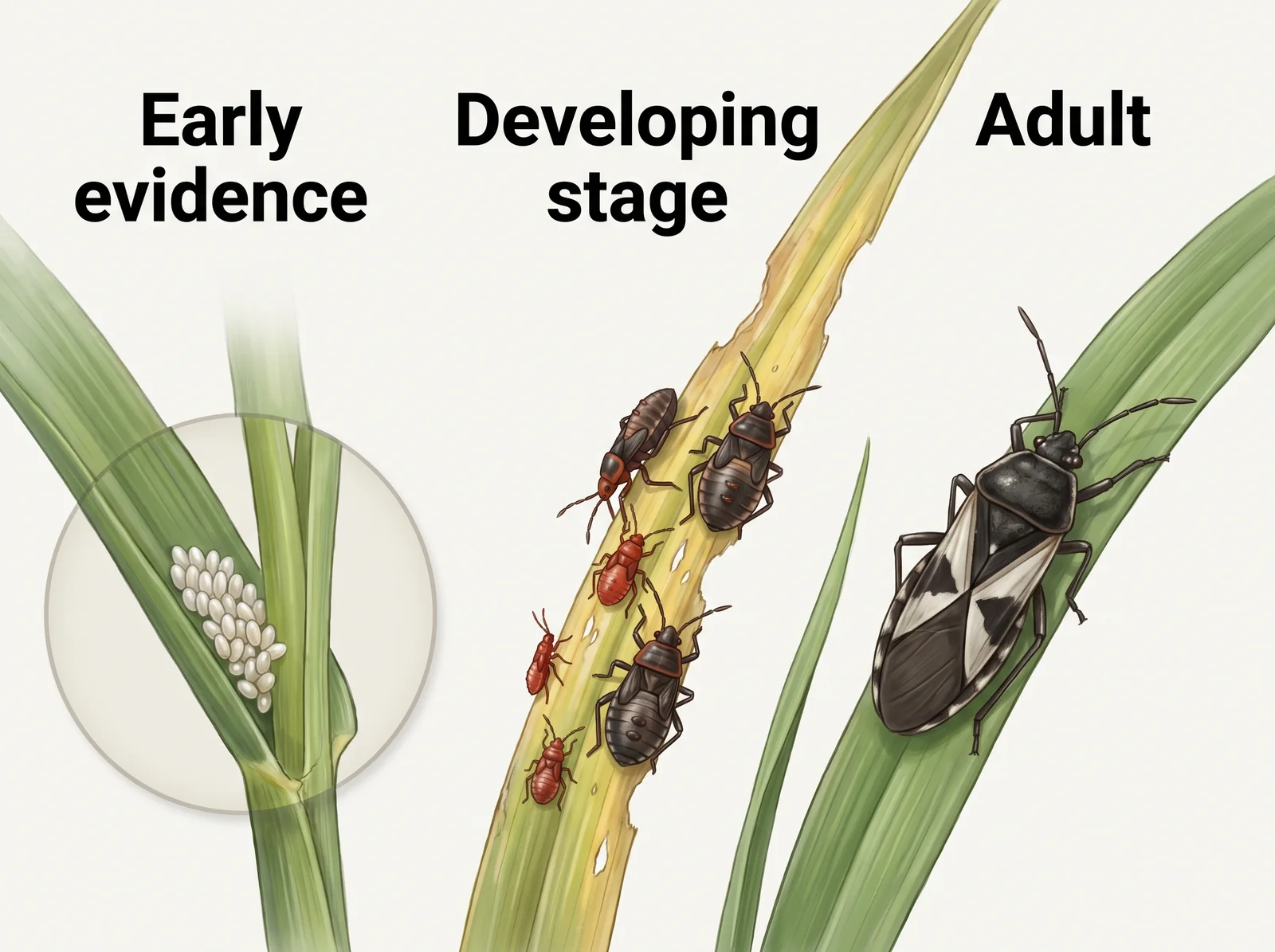
What are the best ways to get rid of chinch bug damage without chemicals first?
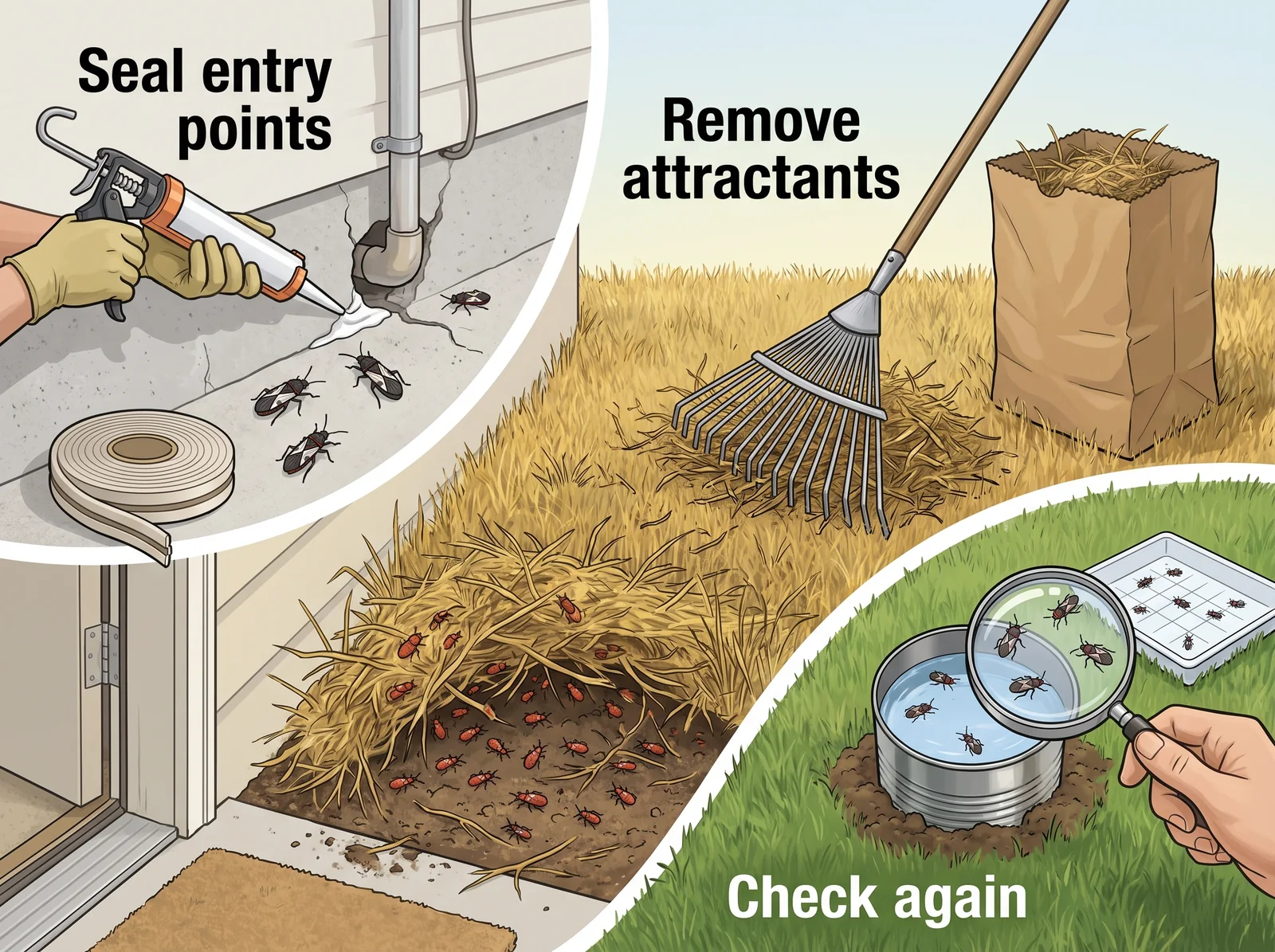
Source removal and lawn care changes are the first line of defense, and they often solve smaller infestations on their own. The goal is to make the lawn less attractive to chinch bugs while helping damaged grass recover.
Dethatching reduces the thick layer where chinch bugs hide and breed. Renting a dethatching machine or having a lawn service do it once a season can make a real difference in how fast you get rid of chinch bug populations.
Deep, less frequent watering encourages stronger root growth than frequent shallow watering. Stressed, dry lawns are more vulnerable to chinch bug damage, so consistent irrigation is one of the most effective non-chemical steps you can take.
Raising your mowing height by even half an inch reduces stress on the grass and shades the soil surface, which chinch bugs don't prefer as much as hot, exposed thatch.
- Dethatch to remove hiding spots
- Water deeply and less often instead of light daily watering
- Raise mowing height slightly during hot months
- Reseed or overseed bare, thin patches once damage stops
When might pesticides be necessary, and how should you use them?
If source removal and lawn care changes haven't slowed the spread after a couple of weeks, a targeted pesticide application may be the next reasonable step for a larger or established infestation.
Use only an EPA-registered product labeled for chinch bugs and for use on lawns or turf. The label will specify which grass types and situations it's approved for, and that information matters more than any general advice online.
Follow the complete label instructions exactly, including timing, watering-in requirements, and any restrictions on pets or children re-entering the treated area. Skipping label steps is one of the most common reasons treatments fail or need to be repeated.
Avoid mixing your own combinations or guessing at strength. The label exists because it reflects testing on that specific product, and off-label use can be ineffective or unsafe.
How do you monitor your lawn after treatment?
Recovery takes time, and chinch bug damage doesn't reverse overnight even after the insects are gone. Give the lawn a few weeks before judging whether the treatment worked.
Repeat the can test in the same spots every week or two. A dropping count over time is a good sign that you're on track to get rid of chinch bug activity, while a steady or rising count means the approach needs adjusting.
Keep watching the marked edges of the original damaged patch. If the border stops expanding and new green growth appears inside it, that's a reliable sign the infestation is under control.
Take a few photos each week from the same spot. Side-by-side comparisons make it much easier to see real progress instead of relying on memory alone.
How can you prevent chinch bugs from coming back?
Prevention is mostly about keeping your lawn from becoming the dry, thatchy environment chinch bugs prefer in the first place. Small, consistent habits matter more than any single treatment.
Stick to a regular dethatching and aeration schedule, especially if you have a grass type known to be chinch bug-prone. This keeps the thatch layer thin enough that it's harder for a new population to establish.
Avoid over-fertilizing with fast-release nitrogen, which can push soft, lush growth that chinch bugs feed on readily. A balanced, slower fertilizing schedule supports steadier, more resilient grass.
Check vulnerable areas, like sunny slopes and strips near pavement, a couple of times each summer. Catching a small population early is far easier than dealing with a spreading one later.
Are chinch bugs a risk to children or pets?
Chinch bugs feed on grass, not people or animals, so they don't bite or sting and aren't considered a direct health risk to kids or pets playing in the yard.
The main safety concern comes from any pesticide used to treat them, not the insect itself. Always follow label directions about how long to keep children and pets off a treated lawn before it's safe to use again.
If you have a lawn service treat the area, ask them directly what product was used and how long the label requires you to wait before letting kids or pets back on the grass.
Watching for visible residue, wet spots, or flagged treatment signs on the lawn is a simple habit that adds an extra layer of caution while the label's wait time passes.
When does it make sense to call a professional?
A licensed lawn care or pest control professional is worth calling if the damaged area keeps growing despite your efforts, or if it covers a large portion of your yard.
Professionals have access to soil and turf-specific tools that aren't always practical for a homeowner, and they can identify whether chinch bugs are the only issue or whether disease and drought stress are compounding the damage.
If you're not confident identifying the insect yourself, sending photos to an identification service or asking a professional to inspect in person is a reasonable middle step before committing to any treatment.
Repeated infestations year after year, despite consistent lawn care, are also a good reason to bring in someone who can assess soil conditions, drainage, and grass health more thoroughly than a quick weekend inspection allows.
Questions you may still have
How long does it take to get rid of chinch bug infestations?
Smaller infestations caught early can improve within two to three weeks once you address thatch, watering, and mowing habits. Larger or established populations, especially if pesticide treatment is needed, may take four to six weeks before you see clear recovery in the grass. Brown, dead grass itself won't turn green again, but new growth should fill in once the insects are under control.
Will chinch bugs go away on their own?
Sometimes, if conditions change on their own, such as cooler weather or increased rainfall reducing lawn stress. But in most active infestations, chinch bugs keep feeding and spreading as long as the thatch and drought stress that attracted them remain. Relying on them to disappear without any lawn care changes usually leads to more damage before things improve.
Can I get rid of chinch bug damage without using any pesticide?
Yes, smaller or early infestations often respond well to dethatching, deep watering, and raising your mowing height. These changes make the lawn less hospitable to chinch bugs and give stressed grass a better chance to recover. Larger, established infestations may still need a labeled pesticide product as a next step if non-chemical changes don't slow the spread within a few weeks.
What does chinch bug damage look like compared to drought stress?
Drought-stressed grass usually greens back up within a day or two of watering, while chinch bug damage stays brown and often keeps expanding even with regular watering. Chinch bug patches also tend to have ragged, irregular edges rather than the more uniform look of drought stress. A can test at the edge of the patch is the most reliable way to tell the difference.
Are certain grass types more prone to chinch bugs?
St. Augustine and zoysia grasses are commonly affected, particularly in warm, sunny regions where these grasses are popular. Other turf types can still host chinch bugs, though damage may show up less dramatically. If you have a chinch bug-prone grass type, regular monitoring during peak season is worth building into your normal lawn care routine.